Tuesday, March 29, 2011

DYING READING HABIT RENDERS BOOKSTALLS DESERTED

‘Education is common but Knowledge is rare’: Saien Ditta, a vendor at Old Books Stall at H-9 Sunday Bazaar

By Mahtab Bashir

mahtabbashir@gmail.com
Islamabad


How many types of books are there? The philosopher Francis Bacon answered four centuries ago, “Some books are to be tasted, others to be swallowed, and some few to be chewed and digested.”


During a visit to H-9 Sunday Bazaar, when this scribe asked the complementary question, how many types of readers are there? Saien Ditta- the old books vendor said some read only if they have to, others read anything they can get hold of, yet others search for challenges. Some like poetry, while others enjoy non-fiction. Some readers start a book hesitantly until the writer casts a spell on them; others open books with great gusto but abandon them after a few pages.


Ditta, 47 sitting on a bench inside his Stalls No. D-502 & D-503 while talking to Daily Times said that book reading habit no doubt is on the verge of decline because of rapidly integrated computer technology where anyone could access at any time with spending a meager amount and that too without leaving their homes.
“I have put up all sort of books from Urdu, English literature to Persian, French, Italian, German and literature from all over the world. Besides a wide range of course books from matriculation levels to graduation, local and international magazines, cooking books, English novels and stationary, but unfortunately the customers are few,” Ditta said.

There are around 5 old book stalls in H-9 Bazaar held under the banner of Capital Development Authority (CDA) selling various sort of literature books and academic books for students but it was witnessed during the visit that only students who are preparing for their exams are frequently visiting these stalls and asking for guess papers/ keys/ or guide books from the bookstalls vendors. I have been doing this business because of my romance for reading books for the last 15 years. “I take a strange sense of satisfaction while reading a book and this trait of mine pushed me establishing this business I started from G-9 Bazaar Sunday Bazaar that is now shifted to H-9 Bazaar,” Ditta said.

When asked why this habit of reading books is on the verge of extinct, Ditta said smilingly in Pakistan it was never on the rise. “Centuries ago, there was no Internet facility in Europe but whole Europe experienced the intellectual revolution when philosophers and intellectuals brought prosperity to their respective countries,” he said adding I have access to modern technology but still I steal more pleasure reading book instead of browsing on internet.

Another reason that caused the downfall of reading books is everyone has become selective. “Students just picked the books for reading and getting good grades to pass the examination and later find a good job but hardly anyone grab the literature books to enhance his knowledge,” Ditta said adding now ‘Education is pretty common these days but Knowledge is rare’, he said precisely.

To a question, Ditta said the fundamental reason of decrease in book lovers is the ongoing inflation and interest of people comes later. Quoting an incident, he said a young kid comes to his stall thrice as he was interested to get a book but her mother took her to away on an adjacent stall of a food where they both had cold drinks and snacks,” Ditta said smilingly. He said 90 percent of his customers are students while just 10 percent of customers visited his stall for literature books, novels, magazines, or cooking books etc.

“I am doing a government job as well and purchased books from Lahore and other jumbo book stalls on a cheap rates and offered my customers on a 50 percent discount and sometime lesser than 50 percent rates but still I found them reluctant to buy books, Ditta said adding customers leave the stall saying price is not affordable to him/her.


“There was a time when I used to sell good bulk of books a month time, now I only manage (to sell) just few in a day, “ he said. But still it is a good source of knowledge, I am selling it to my satisfaction and people like me are buying it to theirs’, Ditta said.


Daily Times,
however, found that a few dedicated patrons of these shops still exist. Mahwish, a housewife, while purchasing a couple of Urdu novels said that she has been a vivacious reader since her childhood. “It has everything to give me guideline of settling the domestic issues, nurturing the kids and how to struck a balance between home and outside affairs,” Mahwish said adding reading Urdu digest guided her understanding the child psychology.


Another English novel lover, Rafea Manan said there is a mustiness and familiarity to old bookshops that isn’t always found in the glossiness of larger bookstores in the city. “I can have some unique books from here at time that are centuries old and thus haven’t lost their uniqueness,” she said.
People like Mahwish and Rafea, however, are in minority.

Many of us no longer have the time to be huddled-in with old books.
The prognosis for these old books’ stalls is not good; they are fighting a battle for their very survival- when many believe they might very well already have lost.

ISLAMABAD:
A study carried out by the University of California at San Diego found out that people in the US were consuming more words on average now than in the 1980s. But this was mainly due to increase in online activities including facebooking, tweeting and blogging etcetera.
Pakistan has an Internet penetration of about 10.6 per cent (the second highest in South Asia, after the Maldives), according to Internet World Stats, and PTA expects it to rise rapidly in the coming years.

published in Daily Times, Monday, March 29,
http://www.dailytimes.com.pk/default.asp?page=2011\03\28\story_28-3-2011_pg11_10

Monday, March 21, 2011

INTERNATIONAL POETRY DAY (March 21, 2011)

Dedicated to all drivers who ply their vehicles on the road to prosperity

By Mahtab Bashir


Islamabad

Emotions come instinctively to every individual as he tries to find happiness and grievances utilizing these sentiments. Thus, people while reacting use various modes to express their feelings. Few use an art of painting to express their feelings, many opts to pick up the guns in their hands in frustration and few goes to create emotions with words through poetry.

In such perspective, when we peep through the lifestyle of laborers around us who earn honestly with laborious work, especially of drivers of trucks, buses, vans, or taxi cabs, we came to know they remained satisfy with their lives even though they are people of lesser God and hence, through their experiences they remained resonant putting up a number of verses on their vehicles- sometime emotional, sarcastic, hilarious and sometime with the usage of metaphors or similes to vigorise expressions.

One of the lesser known sides of Pakistani life: the chaotic public transport blossoms in color with buses, trucks, rickshaws and taxi cabs that are decked out in bright paint and elaborate designs- and the best part for many is the poetry.

Poetry in any form is good, but one that comes with hu
mour and sarcasm adds to the spice. In Pakistan we come across many public transport vehicles that have imprinted some form of poetry (shairi) mostly at the back of their vehicles, showcasing that people in particular drivers of these vehicles are not hopeless and proved out to be the beacon of hope for prosperous Pakistan.

Marking the International Poetry Day today, Daily Times, asked many of drivers of these vehicles exploring why they use poetry as tool of their expression, many of them opined every verse is a reflection of their gut feelings. “This is in a very real sense a public conversation which is not in books, which is not in the type of middle class milieus – it’s on the street, and it is what actually we have experienced in our lives and later on engraved at the bumper of our vehicles,” they said.

A taxi cab driver in F-8 parking when asked why he has inscribed this verse ‘Kis Qadar Khush Nazar Atay Hein Meray Shahar Kay Log- Aaj Akhbar Kisi Nay Na Parha Ho Jaisay’, (People of my city look happier today, it seems as if they have not read the daily newspaper), Kashif Satti, the driver smiled and said this verse is not going to be outdated in socio-political milieu of this country. “ I am dejected ever since I heard the release of Raymond Davis, the killer of two innocent Pakistanis and since then drone attacks and extremism has hit the country all over with blasts on a daily basis,” he said with a serious tone.

We must also say that every now and then one does comes across a very standard poetry sample, which makes one think in admiration of poetic sense of its creator as well as the transport owner. Look at this another verse written on a vehicle spotted in Rawalpindi: ‘Jahan Sach Na Milay, Wahan Jhoot Hi Sahi- Jahan Haq Na Milay, Wahan Loot Hi Sahi’ (When you are not to be
succeeded truthfully, you may use the crooked ways). “This is not a manifestation of just a driver of a cab, like me but the reason this verses is here to reflect the vivid picture how much this society has indulged in corruption, nepotism, and biased to say the least as it seems that an honest man has no place in this country to live on,” said Zahoor Ahmed, a cab driver.

Of course, the drivers aren’t writing these verses in a vacuum. Poetry plays a very prominent role in popular culture here – not just as a form of art, but also as a part of everyday conversation. ‘Dawaa Zubaan Ka, Lucknow Walon Kay Samnay- Guftar-e-Boo-e-Mushq, Ghazalo Kay Samnay’, (Mentioning the qualities of mother tongue in front of people of Lucknow, seems like talking about musk infront of Deer). “Often, the verses reflect the culture and cultural background of a particular place where the driver of vehicle belongs to and where these vehicles hang out,” said Hidaytullah, a truck driver belongs to Karachi said.

Religion being the fundamental element influenced our lives and many of drivers opt to choose verses for preaching and suggestions to readers. ‘Sari Musibaton’ Ka Aik Hi Hal- Bistar Utha, Tableegh Ko Chal’, (The only soul soother solution of all troubles is- to go for Tableegh (preaching) is one of such verse written on a van. “I have been driving loader truck since 15 years and I since many years I have been participating in annual ‘Tableeghi Ijtima’ at Raiwind since last many years. I feel relaxed there as it appeases my inner self a lot and that’s why I have written this verse,” said Hamza bearded driver.

Other than this, the drivers of vehicles use poetry on account of relating their personal account of romanticism and livelihood. ‘Musafir Hoon Manzil Ko Ja Raha Hoon- Pait Ki
Khatir taxi Chala Raha Hoon’ (I am a travller head towards my destiny and riding this cab for livelihood), ‘Chalta Hoon Har Subha mein Tumhari Talash May- Har Shaam Laot-ta Hoon Isi Bebasi Ky Saath’, ‘Dil to Day Chukay Hein Ab Naseeb Azma Rahay Hein- Kisi Sangdil Ki Khatir, Taxi Chala Rahay Hein’ ‘Hazaro Manzilain Hon Gi, Hazaro Garian Hon Gi- Sawari Humko Dhunday Gi, Na Janay Hum Kahan Ho Gay’, ‘Sarak Say Dosti Hay, Safar Say Yari Hay- Dekh Piary, Kaisi Zindagi Hamari Hay’, and ‘Na Koi Umag Hay, Na Koi Tarang Hay- Meri Zidagi Hay Kia, Ik Kati Patang Hay’, are few of verses that has preserved the natural innocence and ‘be-saakhtagi’ (spontaneity) of the transport poetry. Many ‘ashaar’ are not hum-wazan, and many have problem with ‘tazkeer-o-taanees’ (gender) e.g. feminine words sometimes are referred to as masculine and vice versa but this lawlessness in poetry is what makes it so colorful and enjoyable.

These hard-pressed drivers use couplets to explain a situation, something like the way proverbs are used but for the owners of public transport vehicles, it’s also about defining their public identity.

Daily Times dedicate this ‘International Poetry Day’ to all drivers, cleaners, mechanics and transporters of Pakistan who despite all hardships are keeping the wheel of economy moving from Karachi to Landi Kotal.

ISLAMABAD:
World Poetry Day will be observed across the world today (Monday) to celebrate the achievements of poets and motivate them to produce quality literature.

To mark the day, different literary organizations will arrange a variety of events including contests, readings and festivals. Renowned literary figures from twin cities talking to Daily Times said that poetry works as an indicator to bring reforms in political, social and cultural spheres of life.

Poetry not only shapes individual identities but also serves the public and evoke their feelings against injustices and inhuman activities, they observed.

The core objective of celebration of this day is to promote the reading, writing, publishing and teaching of poetry throughout the world and as the UNESCO session declaring the day says, to give fresh recognition and impetus to national, regional and international poetry movements. WPD was declared by UNESCO (the United Nations Educational, Scientific and Cultural Organization) in 1999.

World Poetry Day also pr
ovides an opportunity for children, in particular, to be introduced to poetry at home and in schools. Classrooms all over the world will be busy with lessons that seek to equip students with the necessary tools to identify the various types of poetry, examine the works of poets and engage in writing their own poetry.

Exhibitions and poetry evenings showcased the work of poets on or around March 21 to mark the day. UNESCO promoted the efforts of small publishers to publish poetry. The day was first observed in 2000.


Let me wrap up this piece of writing with one of the most common poetic phrase written on these vehicles reflecting the love for mother: ‘Maa ki Duwaa, Jannat Ki Hawaa- Maa Ki Bad-Dua, Ja Puttar Rickshaw Chala’!!!

Thursday, March 3, 2011

ANOTHER VOICE SILENCED: Minority Minister Shot Dead in I-8 Sector of Islamabad

Bhatti calls all religious factions to defeat violence, extremism
*Said I received threats but will not buy any bullet-proof vehicles, would continue struggling for peace
*Minorities sacrificed for Pakistan more than Mullahs who used to issue Fatwas to make situation worse and push solutions further out of reach
*Slain minister acknowledges slain governor’s assertion that blasphemy laws are man-made, not divine, and are misused

By Mahtab Bashir
mahtabbashir@gmail.com
Islamabad
0333 53 63 248 

Before leaving Bhatti’s office winding up my rendezvous, I stood up and whispered in Punjabi, ‘Theek ay Bhatti Sahib, tusi apna kam karo, (you please, do your work), thank you so much for your time. He raised from his chair, hugged me smilingly and asked me, ‘yar mahtab, ay interview kis din chapay ga’? (When this interview will get published? I said Saturday or Sunday are usually dull days and space would be sufficient so these days are better to flash your interview. ‘Theek ay’, Bhatti said in his low voice putting his hand on red tie. ‘Oh sorry Bhatti Sahib, “Every time I make promise to gift you a red tie, but I always forget to bring it. By the way, why you wear red ties, only” I asked final question while standing. Bhatti smiled again and said ‘pata nahi yar bus waisy e menu ay colour pasand ay, red colour prominent ay na. "Bloody" colour ay’. I nodded my head as we both smile. ‘Beth ja, ki karna e jaa kay, I said bus Sir kafi kam ikatha ho gia ay subha da, stories file karan da time ho gia ay, fair mulaqat hoi gi, insha allah, tay ais dafa ‘Red Tie’ zaroor lay kay awan ga. The minister smiled in response and I left Green Tower – where the ministry of minority affairs office located in.

This informal long chat proven to be my last meeting with federal minister for minority affairs, Shahbaz Bhatti on Tuesday March 1, 2011, 15 hours before I heard the news of Bhatti was gunned down on Wednesday morning in Islamabad as he left his house (in sector I-8) to attend a cabinet meeting.


He surely was a down to earth creature, very hospitable and a rare breed among the federal ministers who always talked selflessly for underprivileged. During the meeting, when I asked, Bhatti sahib, where is your security? I mean from comming up from the parking lot of this Tower till the up, there’s all open spaces and even in reaching the 6th floor there is hardly a security personnel deputed. Bhatti with his trademark smile said, ‘yar asi Saien log aan, sanu kisay nay ki kehna ay- Chaa pi tu’.

While sipping he asked me in Urdu, ‘Yar mahtab tum kahan sy parhay ho’? I said I have obtained Master's degree from Quaid -e-Azam University (QAU), Punjab University (PU), and now looking forward to get another degree in Mass. Communication from Allama Iqbal Open University (AIOU) as being relevant discipline to my profession. He smiled again and said, "Good... Achi bat hay yar. Parhai bohat zaruri hy. ... Acha jatay hayu bahir say meri aik passport size photograph le jana, wo interview kay sath laga lena, I smiled and said OK ... don’t worry bhatti sab.

And next day (Wednesday) it was my weekly off when in my sleep I got a text message from a friend about the brutal assassination of Bhatti. I hurriedly put away my quilt and started flipping remote control- every channel was flashing the callous murder of the Minister. The next moment I was on my way to office. I filed the interview on the same day (Wednesday) well ahead of my promise of Saturday or Sunday! RIP minister!

Here is the swan song Bhatti sang to me!

http://www.dailytimes.com.pk/default.asp?page=2011\03\03\story_3-3-2011_pg11_7

All religious factions in the country should get together and come forward to shun the religious extremism and violence, which is on the rise in recent years, and soon ministry will invite intellectuals from all segments of society to seek their advice to combat this menace of extremism, Federal Minister for Minority Affairs Shahbaz Bhatti said this on Tuesday night hours before his voice was silenced forever by the bullets of extremists on Wednesday.

Sitting in his office, calm and composed wearing red tie- as his favourite, Bhatti said every religion conveys the message of love, tolerance, peace and brotherhood but unfortunately nothing is visible in our society because of rapidly spreading tentacles of extremism.

Talking exclusively in his last interview, the assassinated minister wished to take all religious, political, and academicians on board to eradicate radical elements involved in ruining the peace, stability and interfaith harmony in the country and bringing bad name abroad.

Terming the assassination of governor Punjab as an act of brazen timidness, that was sabotaging the peace in the country, Bhatti said the killer wanted to disrupt the peace of country and interfaith harmony as Taseer always tried to protect the minorities’ rights.


“The minorities in Pakistan have sacrificed more than these handful of radical forces members who made just Fatwas (edict) to aggravate the situation and exploit people rather going for the solution,” Bhatti said. “These hardliners are the one who destroy shrines, hospitals, educational institutions, and other worship places, whereas minority of Pakistan has produced a number of icons who made their names across the globe,” Bhatti, still a bachelor said.

Referring to murder of Punjab governor, Salman Taseer, Bhatti categorically said all Mullahs who made the Fatwas over blasphemy convicts firstly be arrested for initial investigation of Taseer’s assassination,” he said, adding Taseer was against the blasphemy laws, implemented in the country, as he termed this law as man-made and not divine that is being misused for political, religious and personal vendetta.

Bhatti, who was one of successful minister to reassigned the same portfolio after the resizing of federal cabinet few weeks ago, said slain governor was the person who consoled Aasia Bibi, who was wrongly involved in blasphemy law.

“She was innocent that is why governor met her and promised her to save her life requesting president Asif Ali Zardari to pardon her,” Bhatti said, adding nobody could change their views regarding the misuse of blasphemy law.

Lauding the role of minorities in Pakistan, Bhatti said minorities in the country had staunch faith in all Islamic teachings, Quran, Prophet hood of Muhammad PBUH, and all religious personalities. “None of those could imagine to think to convict blasphemy laws but here in the country radical forces are exploiting these laws for personal interests and we would not allow anyone to exploit these laws in their favour to spread a wave of fanaticism,” he maintained.

He said minorities had participated and struggled extensively in creation of Pakistan and through blasphemy law fanatics wanted to terrorise the country. “These extremists want nobody to talk about blasphemy laws and if someone talked about it, he is convicted for blasphemy,” minister said adding minorities in Pakistan do not want to achieve their rights gaining sympathy from others.

Condemning the role of large public for making Qadri a ‘Hero’, the minister said he condemned the members of legal fraternity for fighting Qadri’s case ‘free of cost’. “I will request again to heads of bar councils to take this decision seriously, governor murder was religiously motivated backed up by political actors with a planned conspiracy,” Bhatti said. “We will fight against it and we will not compromise on it,” soft-spoken Bhatti said.

Giving solution to counter the spreading fanaticism, Bhatti said confrontation is not at all the solution but negotiation and mutual talks are. “I have received a number of threatening text messages, telephone calls, emails and letters to stop raising voice for minority rights and misuse of blasphemy laws but this act could not deter my commitment. I don’t want security, I don’t need bullet proof vehicle- that’s what I am,” Bhatti said.

Talking about the recent steps taken by his ministry for safeguarding the rights of minorities in Pakistan, Bhatti disclosed that we have formed ‘District Interfaith Committees’ in all districts of the country with members belonging to all segments of society. “After this we will form 27 members ‘National Interfaith Council’ at federal levels and initiate the process of negotiation taking all religious groups on board. “Hope this would promote the interfaith dialogue and help projecting peace, tolerance and love among the people of all communities,” he said.

The slain minister said ministry is working on ‘3 E Agenda’ - Emancipation of minorities in Pakistan, Equality, and Empowerment. “Under this policy, we will work out bridge the gap, create an atmosphere of tolerance, and to counter extremism at local levels through dialogue,” he said.

Bhatti said in his recent foreign tour, he met with US secretary of state Hillary Clinton, a number of senators and Canadian Prime minister, who lauded our services for the protection and uplift of the minority communities. “Interfaith harmony is the need of the hour and only solution to counter ‘clash of civilization’, ‘prejudice’ and ‘zero tolerance’ for other religion. This is not a need of Pakistan it is global a need and international community has acknowledged us,” Bhatti said proudly.

I want to see Pakistan a liberal and progressive state as envisage by the founder of this nation, Quaid-e-Azam Muhammad Ali Jinnah, and PPP slain founder Zulfiqar Ali Bhtto and Benazir Bhutto and under the leadership of president Asif Ali Zardari, we are making headway to make Pakistan a progressive state.

With the wishful thinking Bhatti sang his swan song requesting all liberal and progressive forces to come forward and join hands to eradicate all those forces that want to harm peace and ongoing democratic process in the country.


ISLAMABAD: The Catholic slain federal minister Shahbaz Bhatti, son of Jacob Bhatti was born on September 9, 1968 in Lahore, Punjab. Bhatti joined Pakistan People’s Party (PPP) in 2002. Shahbaz Bhatti was elected Member of the National Assembly on reserved seat for minorities on the ticket of Pakistan Peoples Party (PPP). He was made Federal Minister for Minorities in year 2008. Shahbaz Bhatti was again included in the Federal Cabinet with same portfolio last month. He was one of the founding members of All Pakistan Minorities Alliance (APMA) in 1985. He was Chairman of All Pakistan Minorities Alliance, Founder and President of the Christian Liberation Front, and the Executive Director of the Pakistan Council for Human Rights. Shahbaz Bhatti was the first parliamentarian who made history by assuming the Federal Minister for Minorities. Shahbaz Bhatti also received International Religious Freedom Award for rendering services to the community. He was the first ever Pakistani to receive this award. He was bachelor and have four brothers and one sister. His father died last month in Faisalabad. He was living in Sector I-8/4 Islamabad. As federal minister, Bhatti took stern measures to ensure the safety, rights and empower religious minorities while in office. He launched national campaign to promote interfaith and harmony through seminars, awareness groups, and workshop.

Monday, February 28, 2011

AFTER THE PHONE CALL ...!

SPY WHO 'LOVED' ME

If the reports on the issue are critically scrutinised, it looks like a staring down contest between the intelligence agencies of Pakistan and the US has begun. The Central Intelligence Agency (CIA) and Inter-Services Intelligence (ISI) chiefs, Leon Panetta and General Ahmad Shuja Pasha have spoken on the phone and the ISI has asked that information be given to it about all CIA operatives in Pakistan. It seems that the Raymond Davis affair has given way to something bigger, more substantial, and more beneficial for the security agencies of Pakistan.

The intelligence agencies of Pakistan have a few ideas of their own that they may feel might just get sorted out by the debacle that is the Raymond Davis fiasco. It is no secret that the US has persistently pressurised Pakistan for some time to relax its visa-processing regime for its citizens. Reports in the media have asserted that this request was acceded to by the government without proper security clearance and that visas were issued en masse starting from July last year. The reports imply that the security and intelligence agencies were bypassed for this purpose. If for the sake of argument (although US complaints of delayed visas have not abated) the assertion is accepted, it implies that either the security and intelligence agencies failed to insist on proper clearance or the government was able to circumvent well laid down and long established procedures for the purpose. Both arguments seem incredible as they imply a breakdown in government procedures, an assertion for which there is no proof except the (seemingly motivated) reports in the less responsible sections of our media. So what is the truth?

Our intelligence and security agencies are known to be less than well pleased with the efforts of the civilian democratically elected government to forge ties between the US and Pakistan that rely more on the political government rather than the older Musharraf-era conduit of the intelligence and security agencies. For the latter, the villain of the piece is our Ambassador to the US, Husain Haqqani, who has been accused of responsibility for ‘unleashing’ the Raymond Davis brigade inside Pakistan. Now while this, and his alleged responsibility for the critical sections of the Kerry-Lugar Act regarding civil-military relations may be enough to earn him the ire of Pakistan’s intelligence agencies, it exaggerates the role of the Ambassador and depreciates the way the US’s system works. It is very difficult to believe that anything manages to escape the careful watch of our intelligence agencies. Even if the civilian government has expedited visa issuance for US citizens (although the evidence does not support this contention), there is hardly a chance that these visas are granted without some measure of scrutiny by the establishment. However, it may be that this scrutiny has not been up to par, partly because the US and the CIA’s covert operatives had better covers than our spooks could detect. If this is so, it is hugely embarrassing for our redoubtable agencies. The Raymond Davis affair may just have handed Pakistan’s security agencies a convenient leverage to roll back any suggestion of a ‘liberalised’ visa regime and wrest complete control of it from the civilian government.

Davis may have sent the relationship between the two countries spiralling to new lows but the fact remains that there is a bigger picture at hand. While the whole affair may have given our security agencies more leverage to demand details of CIA operatives working within Pakistan, it may also have given them a bargaining chip in the greater game. It is well known that differences exist between Pakistan and the US, and the intelligence agencies of both, on the war on terror and the fact that Pakistan has given safe havens to the Afghan Taliban, its proxies for the approaching endgame in Afghanistan. This has restricted the civilian government’s say and leg-room to manoeuvre.

The Raymond Davis saga may just provide the security agencies of Pakistan with enough sway to ensure that, after the looming US withdrawal from Afghanistan by 2014, Pakistan has its finger in the proverbial pie with its Afghan Taliban proxies sitting comfortably at the Afghan table.

Sunday, February 27, 2011

POLITICAL DIVORCE BETWEEN PML-N & PPP IN PUNJAB- a bad decision?

Addressing a press conference in Lahore after a meeting of party members over the fate of the Punjab coalition government, Nawaz Sharif announced a parting of the ways with the PPP and elaborated at length why PML-N decided to embrace dissident members of its splinter party PML-Q, which he had hitherto rebuffed and refused to shake hands with. He said the members who did not violate PML-N policy and had been ‘duped’ into joining the king’s party would be welcomed back into the parent party’s fold. Much as he tries to gloss over it, the fact remains that he is once again opening the doors to horse-trading and the politics of defection a la the decade of the 1990s.

The fate of the PML-Q Unification Bloc and, by implication PML-N, is in the hands of the Election Commission, which will decide whether or not the defection clause applies to this situation where a sizeable group has violated a party’s discipline. The PPP has announced its decision to sit on the opposition benches in Punjab, while not renouncing the politics of reconciliation. In fact, the joint team of PPP and PML-N reviewing the progress on the 10-point agenda termed it satisfactory and decided to continue cooperating on the issues on which consensus had been achieved. This is contrary to the impression Nawaz Sharif tried to give regarding the PPP’s failure to implement the agenda in the given timeframe of 45 days. This changing of gears by the PML-N is going to have short-term as well as long-term implications for the country.

It is not clear what are the calculations of the PML-N, because it will not be easy to unseat the federal government. If the mid-term elections do not happen anytime soon, it will add to the animosity between the two parties from hereon. For now, Punjab has already become a political battlefield. The change of Opposition leader after the PPP’s joining the opposition benches in Punjab will be the first test of the new relationship between the two parties that have now become rivals instead of partners.

It is reported that Chaudhry Zaheer of the PML-Q will resign from the Leader of the Opposition post to make way for a PPP member to assume this position, given its strength. The coming days will reveal whether this transition is smooth or not, and how the new relationship will unfold. However, the signs that a new political racket is going to start are unmistakable.

In the circumstances that Pakistan faces today, this is a regrettable development. It is going to have a direct impact on the political scene, where the two biggest parties that were working hand in hand to the detriment of extra-constitutional forces, will now be consuming their energies undermining each other. This will also affect other areas of national importance. Political wrangling will have an adverse impact on an already teetering economy and the war on terror. If the old tradition of criticism for the sake of criticism were revived, any reform undertaken by the government would be met with resistance by the opposition regardless of its merit. Already, the PPP has met failure in getting approval for the proposed wealth tax and Reformed General Sales Tax (RGST) from parliament due to a storm created by the opposition parties, including the PML-N, and even some coalition allies.

Also, the highly unpopular war on terror initiated by General Musharraf was given legitimacy by the across-the-board support of all the political parties. It is debatable how the divergence between the PML-N and the PPP is going to impact this war. This indecent burial of the Charter of Democracy is not something unexpected from the PML-N, but may prove detrimental to an already fragile democracy.

Friday, February 25, 2011

MONEY IS NOT EVERYTHING

Money cannot solve everything. It looks as if the richest monarchy in the Arab world and the largest global oil exporter, Saudi Arabia, may be getting jittery at the history-changing events developing across the Middle East. The ouster of decades’ long autocratic rule in Tunisia and Egypt and the wave of protests sweeping across Bahrain, Yemen and Libya have prodded Saudi Arabia into action to placate an ever-increasing disillusioned public.

Returning home after three months spent abroad for medical treatment, King Abdullah announced an extravagant aid package — to the tune of $ 35 billion — aimed at benefiting lower and middle income groups and unemployed youth, and addressing housing problems and high-inflation rates besetting the Saudi economy. This is an attempt by the Saudi monarchy to throw money at the problem as though that is all that is required. The Saudi monarchy is watching closely the rising stem of revolts in the Arab world, deeming it necessary to address issues before the people take to the streets of Saudi Arabia. As most of the reforms in the package aim to address the woes of the youth, it is quite obvious that the Saudi rulers have taken note of the fact that it is the tech-savvy youth demographic that is most active and passionate in the Arab protests.

The Libyan uprising has been reduced to an isolated, hate-spewing dictator watching his iron-clad grip quickly loosening in the face of angry protests and Yemen is seeing nine ministers resign from public office. Inspired by Tunisia and Egypt, the Arab public has finally decided that it has had enough of autocratic regimes, and no place epitomises a seemingly unshakeable monarchy like Saudi Arabia.

There have long been opponents of the Saudi regime but they have always been silenced by the kingdom’s repressive laws and policies. Many political opponents and underground groups have long demanded more gender equality, free elections to municipal councils, etc. However, for a theocracy like Saudi Arabia, introducing reforms that endanger the political-religious status quo will be out of the question. While this aid package is a premeditated move to curb any rising dissent within the kingdom, it must be asked: how far will doling out money go if it is not accompanied by freedom? Money can only go so far when the inhabitants of an oil-wealthy country are boiling over with frustration over the denial of their political, civil, human and gender rights.

Thursday, February 24, 2011

GADDAFI is too 'MUAMMAR' for state affairs, believe Libyans

A defiant Muammar Gaddafi vowed on Tuesday to die ‘a martyr’ in Libya on state television. He further added that he would call the people to cleanse Libya house-by-house unless protesters surrendered. It is important to note here that this is the first time Gaddafi announced his stance publicly since the revolt broke out. Recently, a lot of rumours were flying that Gaddafi had fled; perhaps he thought that it was important to give a public appearance in order to refute all such rumours.

Nevertheless, it is evident that Gaddafi’s regime is crumbling: at least seven Libyan ambassadors are no longer supporting him; his justice minister has resigned; the staff of Libya’s mission to the UN has declared allegiance to the people of Libya; two senior air force fighter pilots defected and flew their jets to Malta when asked to attack protesters. Even his soldiers have turned against him after the people came out on the streets demanding regime change after over four decades of his rule. Moreover, Gaddafi has virtually lost all his strength in the eastern coast and therefore resorted to the oldest trick in the dictator’s book — a brutal crackdown on protesters. On Monday, pro-regime militiamen shot on sight anyone found in the streets and opened fire from speeding vehicles at people watching from the windows of their homes. Almost 62 civilian casualties have been reported in Tripoli in the last two days.

The problem with Gaddafi, like most other dictators who have been in power for a long time, is that they never read the writing on the wall. The thought of giving up never crosses their mind. So much so that they do not even hesitate to massacre their people to prolong their rule. The UN Security Council held an emergency session, and western diplomats pushed it to demand an end to the retaliation against protesters. In addition, the French foreign minister, UN chief and UK foreign secretary strongly opposed the attacks on protesters. In the light of all this, it is becoming quite clear that Gaddafi will not be able to survive. Everyone is waiting for Gaddafi to realise this and spare himself and the people more trouble. The time has come!

Monday, February 21, 2011

TUM TO MUJHAY AZIZ HO 'NASWAAR' KI TARHA

Bahein galaay may daal kay kehta tha 'Raymond Khan'
'Tum to mujhay aziz ho Naswaar ki tarha"!

The United States government was unaware that Raymond Davis was hooked on ‘naswar,’ and in all probability he is now undergoing withdrawal symptoms, unless there is a friendly guard nearby to offer him some, or the jail doctors recommends weaning him away from what is a legal form of tobacco.

When the US Embassy was approached, they appeared unaware of Davis’s ‘desi’ addiction. Abrupt stopping of ‘naswar’ intake can be uncomfortable as junkies discover, if they are without their hourly ‘fix’. Withdrawal symptoms include headache and anxiety and anger.

According to a Bannu shopkeeper, the price of one packet of Bannu Naswar is Rs7. “One packet is enough for thirty pinches of ‘naswar.’

According to the challan by the city police in Lahore, a packet of ‘naswar’, was also recovered from Davis’s car, amongst other personal and lethal items that an undercover agent on active duty is expected to have with him at all times. US troops stationed inside Afghanistan are known to enjoy ‘naswar’ and have become hooked to it. Davis in all probability must have picked up the habit during his long stays in Khyber Pakhtunkhwa. It also reflects on the company he was keeping at the time. The problem of ‘naswar’ like chewing ‘pan’ is that one has to spit it out after a while.

Whether the Americans including Davis have found a socially correct way to deal with this aspect is unknown or did he spit it out of his car window?

According to Wikipedia, ‘naswar is held in the mouth for 10 to 15 minutes. If it is chewed it produces a bad taste in the mouth. Usually, the consumption varies but mostly people take it on an hourly basis.’ It is primarily used in Central Asia, Iran, Afghanistan, Pakistan, Tajikistan, Sweden and India.

“Once I was sitting next to a Norwegian at a meeting in Europe and was surprised to see him enjoying ‘naswar’”, a Pakistani diplomat told The News. It is predominantly used by members of the Pashtun ethnic groups. Nowadays people of other regions i.e. Punjab, Sindh and Baluchistan also use it and the number of addict people is increasing day by day.

Some of the great varieties of naswar are found in different parts of Khyber Pakhtunkhwa province in Pakistan, but Bannu is especially famous for it. There are different brands of ‘naswar’ in the provinces such as “Toor Khamar”, “Missile”, “Safarish Khan”, “Lucky” etc. Toor Khamar ‘naswar’ is prepared in Shahbaz Garhi, Pakhtoonkhwah, while Safarish Khan and Lucky are prepared in Havelian, Pakhtoonkhwah and Abbottabad, Hazara Division, Pakhtoonkhwah.

The News received telephone calls from the Fata area, and two calls from Waziristan when this correspondent had in an international Pushto programme, mentioned Davis’s love for ‘naswar’. “This is the only good thing we have heard about this American killer. We are glad that he has picked up this healthy habit from his Pushtun friends and acquaintances,” said a gentleman who identified himself as Wazir Khan.

Some of Khan’s friends had this to say, “So much attention is being given to three boys killed in Lahore by an American. What about the Pakhtuns who are being killed like flies by US drones? What will it take to get kind of worldwide attention?”
Courtesy Mariana Babar, The News

Sunday, February 20, 2011

LAHORE SHOOTINGS- UN ANSWERED QUESTIONS!

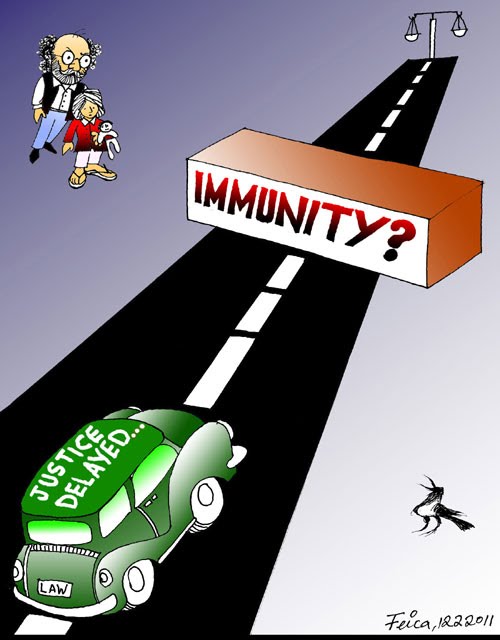
A court in Pakistan has delayed a hearing to decide whether an American who shot dead two men in Lahore last month has diplomatic immunity. The arrest of Raymond Davis has severely damaged relations between the countries. Much of the detail in the case remains unclear - the BBC's Syed Shoaib Hasan looks at some of the unanswered questions.

Is Raymond Davis a diplomat?

If you are thinking of a suavely dressed man in a three-piece suit who holds meetings with local officials to further or broaden his country's agenda, you would be wrong. Mr Davis was definitely not employed for his diplomatic skills - he is more a "hands-on" person, working in what the US embassy says is its "administrative and technical affairs section". Reports from the US say he is a former special forces soldier who left the military in 2003 and is working for the US embassy in Pakistan. As such, the US insists he is covered by the Vienna Convention which guarantees immunity from prosecution for all diplomatic staff.
Could he be a spy?

Many Pakistanis believe he is - there seem few other credible explanations as to why he was going around Lahore with a Glock pistol in a car with local number plates without informing local authorities. It is a requirement for embassy staff - especially those from Western embassies - to inform local police of their movements, simply because they are prime targets for militants in Pakistan. Mr Davis's department in the US embassy is widely seen in Pakistan as a cover for Central Intelligence Agency (CIA) operations. Mr Davis himself said he was a consultant employed by the US government. Researchers in the US say that since leaving the military, Mr Davis worked for a security firm called Hyperion LLC. But subsequent investigations by the US media have now shown that Hyperion exists only as a website. The offices that the company says it has in Orlando have been vacant for several years and the numbers on its website are unlisted. Mr Davis insists he was acting in self-defence.

Can Mr Davis be convicted for the murders?

Maybe. It all depends on how eager the Pakistani authorities are to punish him. The fact that he is possibly a spy does not mean he is not covered by diplomatic immunity. It is common practice for intelligence services across the world to send operatives under the cover of assignments to embassies. Both Pakistani and US "diplomats" have been caught in such situations - and every time have been asked to leave the host country immediately with no possibility of a return. That is the maximum punishment that has been levied in the overwhelming majority of cases in countries which have signed the Vienna Convention. However, in some countries there are exceptions for serious offences committed, such as murder. Pakistan is one of those countries. The matter is now in the hands of the judiciary. But it is important to remember that Mr Davis has been charged with murder - the maximum sentence here is the death penalty.

Should Mr Davis have been carrying a gun?

Legally speaking, only Pakistani citizens with licences issued by the interior ministry are allowed to carry arms. No foreigner is allowed to carry arms, except soldiers or guards within the premises of an embassy. Both Pakistani nationals and foreigners caught carrying arms can be charged under a Pakistani criminal law which stipulates a jail term of six months to two years in addition to a fine. Mr Davis has also been charged under this law. Matters were further inflamed by the suicide of the widow of one of the men killed by Mr Davis.

Was he acting in self-defence?

That was the initial plea made by Mr Davis and the US embassy. However, subsequent investigations by the police, forensic labs and the local and international media suggest that the two men were driving away from Mr Davis when they were shot. In February Lahore's police chief said that Mr Davis was guilty of "cold-blooded murder" - he said that no fingerprints had been uncovered on the triggers of the pistols found on the bodies of the two men. Furthermore he said that tests had shown that the bullets remained in the magazines of their guns, not the chambers, suggesting they weren't about to shoot him. On the face of it, this leaves Mr Davis's claim that they were robbers - with one even apparently cocking a gun at his head - looking very thin. In addition, police say ballistics evidence shows that the pair were shot in the back - which again suggests they were moving away from Mr Davis, rather than about to attack him.
Who were the Pakistanis that Mr Davis shot?

In his initial statement, Mr Davis said they were robbers who were trying to steal his valuables. He and the US embassy have maintained this story. However, the men have no criminal records as such. Both have been identified as residents of Lahore by the police. The pair were carrying licensed pistols - a fact which led many to believe they might indeed have been robbers. However, security sources in Lahore say that they were part-time or low-level operatives for the local intelligence services. Although reports are sketchy about what they were doing in relation to Mr Davis, security officials believe it could be the case of a surveillance operation gone horribly wrong. Pakistani intelligence services routinely tail and monitor all embassy staff, Western or otherwise. A third man on his motorbike was killed in the incident by a mystery US car

What about the second car and its victim?

A side event to the main drama concerning Mr Davis was the fact a third man was also killed during the incident. He was an innocent bystander run over by a US embassy vehicle, which was initially said to have arrived to rescue Mr Davis. The fact that an embassy vehicle was able to get to the spot so quickly was a source of astonishment to anyone who is even vaguely aware of the geography of Lahore. Given the incident was over within minutes, it seems incredible that anyone could negotiate the 12km (7.4-mile) 40-minute drive in peak traffic in less than five minutes. But subsequent investigations have now shown that the second car - a Toyota Landcruiser - was with Mr Davis at the time of the incident. In fact, according to eyewitnesses, Mr Davis was leading and clearing the way for the Toyota when the incident took place. In the light of what happened afterwards, it seems Mr Davis was in "protective mode" and opened fire to "secure" whoever or whatever was in the Toyota - the interior of this vehicle was not visible as its windows were tinted. It is evident in local TV footage that the second vehicle is going away from Mr Davis at the time of the incident. As it disappears into the dust, Mr Davis calmly pulls over and gives himself up. Pakistani authorities have asked for the Landcruiser and its driver to be handed over - a request with which the US has yet to comply.
What about behind-the-scenes negotiations?

As well as public pressure, US officials have also privately warned Pakistan's government of far-reaching and severe consequences if Mr Davis is convicted. Unnamed US officials have also used the media to issue veiled warnings to Pakistan that diplomatic ties could be cut and all aid stopped. Despite Islamabad's public stance on Mr Davis, Pakistani officials are said to have privately assured Washington that he will eventually be released. However, public pressure means that at the moment this could lead to a massive anti-government backlash. Pakistan's Prime Minister, Yousuf Raza Gilani, has hinted that blood money could be paid to the families of the two men Mr Davis admits shooting, which could enable his release. There is speculation that US officials may try to establish contacts with the families in this regard. However, it is not clear that Mr Davis has been charged under laws which would allow blood money to be paid.

LONG LIVE PAK-US RELATIONS!

HIT-&-RUN KILLER REACHES BACK USA

An American driver and another person whose vehicle crushed a Pakistani motorcyclist to death in Lahore as they were rushing to the aid of Raymond Davis, who had committed double murder, have slipped out Pakistan and are back on American soil, a senior US official told an American television network.

The American sought for arrest after a court order, who the State Department only identified as a member of the US embassy’s staff in Islamabad, Pakistan, was behind the wheel when he struck and killed a bystander while speeding to the area where shooting took place. The driver of the vehicle held the same “diplomatic visa” as Davis, US officials told ABC News. Since his arrest, the US argued that Davis should be afforded diplomatic immunity as a member of the embassy’s “technical and administrative staff” and released.

Authorities in Punjab said they sent five letters to the US Embassy asking that the driver and vehicle be handed over, but have reportedly received no response. It is unclear when the driver and his passenger were spirited out of Pakistan, but a senior US official said it happened soon after the shooting incident, the report said.

Meanwhile, State Department spokesman Philip Crowley declined comments when asked whether the Americans sought by Pakistani authorities were still in Pakistan. “I’m not going to comment,” was all he said.

Friday, February 18, 2011

TIME TO MOVE FORWARD

Courtesy Daily Times Feb 18, 2k11 The Raymond Davis affair has, unfortunately, blown up into a full political crisis. Instead of remaining a legal matter concerning only the Foreign Office and relevant government authorities, it has entered the domain of public discourse and cheap political manhandling. Much has been said and commented about the American who still cuts a shadowy figure. However, it is being pressed upon the Pakistani government that murderer or not, Raymond Davis holds a diplomatic passport and, as signatories of the Vienna Convention of 1961, it is implicit upon us to acknowledge that he enjoys diplomatic immunity as stated in international law. Senator John Kerry, on his recent one-day visit to Pakistan emphasised as much: international law supersedes the dictates of our local courts. The senator came to Pakistan in what can best be described as a damage control exercise. He spoke lucidly, candidly and politely but he did not refrain from conveying the underlying message: that Pakistan and the US must act responsibly to resolve this unfortunate incident. That, in the end, is what the entire debacle boils down to. We must set our emotionalism and raging sentiments aside and converge at a point where national interest is not put at stake. Ever since Raymond Davis shot two men in Lahore last month, the governments of both Pakistan and the US have mishandled the case in varying proportions. The Pakistani government, without considering the huge risks associated with the case, did not take into account the fact that Davis could very well be a diplomat (which the Foreign Office has also confirmed) before putting him in the lockup and proclaiming to the media that the courts would handle the issue. The US, on the other hand, asserted itself too aggressively when it insisted initially that Davis enjoyed full diplomatic cover before producing proof for their argument. Even now, if the brothers of Davis’s victims are to be believed, the US offered them ‘blood money’ — dollars and green cards — to drop the case. This is no solution and the US itself needs to act responsibly and cautiously. For all its premature huffing and puffing, the government in Pakistan now finds itself between a rock and a hard place. Its awkward position is such that if Davis is not released, vital assistance and ‘friendship’ with the sole superpower will be put at stake and if he is released, the public backlash in Pakistan could shoot through the roof. It is not a walk in the park for the US either as it cannot afford to simply drop Pakistan from its list of allies like a hot potato. The gains made in the war on terror and the threats to NATO supply routes that run through Pakistan are all huge costs if ties are broken. That is why Senator John Kerry’s soft-spoken entrance to soothe the potential fallout came as a welcome break from the high-pitched emotionalism that has rocked this case to and fro. It must be mentioned that the senator did offer a consolation prize. If the Foreign Office, and officials of both governments cooperate and engage in a rational way and hand over ‘the diplomat’, Raymond Davis, to his country, Kerry assured us that complete criminal investigations would be carried out on US soil. This is considerably far more than what we have been offered by the US so far and, if better sense prevails, we ought to move forward to bring this whole sorry affair to a close. As far as any public reaction to responsible action is concerned, the right-wing only needs an issue to exploit and the Americans have given them some juicy ammunition. Now that the blasphemy issue has died down, Raymond Davis is the perfect pawn for street agitation. The Pakistani government is no stranger to right-wing agitation and, if handled cautiously, this issue too will eventually die down.

Thursday, February 17, 2011

RAYMOND DAVIS, HIS TRICKS & SECTION 302

By Mahtab Bashir
mahtabbashir@gmail.com
Islamabad

Many opine that Pakistan will not have to face any kind of negative consequences in case it refuses to release Raymond Allen Davis- a killer of two ‘innocent’ Pakistanis, despite growing US pressure. They are of their views adding that even isolation of Pakistan in the comity of nations would be a blessing in disguise and the Islamic Republic would emerge as a stronger country. If tiny countries like Cuba and North Korea could withstand pressures, there was no reason why Pakistan could not do so!


The challan submitted by the city police against US national Raymond Allen Davis in a court reveals that the accused tried to cheat the police by concealing the facts.

The challan reads that “Davis continuously told lies to the investigation team and completely refused to help them reach the facts, saying that the American consulate had directed him not to reply to any query of the police”.

The text of the incomplete challan submitted in the court is being produced here:

“The case was handed over to Lytton Road Police Station In-charge Investigation Inspector Muneer Ahmad. During the investigation, the inspector took the dead bodies of the two (victims of Davis) – Faizan Haider and Faheem Shamshad – from the emergency ward of the Services Hospital and in the guard of policemen sent them to the mortuary. Lytton Road Police Station SHO, Atif Meraj Khan, took the belongings of the dead and other material in his custody and got them registered in fardats (the relevant papers) and handed over to the investigation officer. The detail of the things is as follows: one belt, one pistol pouch, one handbag, two wallets, five mobile phones (Nokia 18910, Samsung, A1303, Sony Ericsson T 700, Nokia 1616, 6300), Pakistani and foreign currency (Yen 58,915, Omani Baisa 1100, Piso 10), two national identity cards bearing Faizan Haider and Zohra Shahzad’s names and different pieces of papers. Later, the IO visited the crime spot and took in possession the following things: the deceased persons’ Honda motorcycle bearing number LOV 4030, the blood of the two deceased on cotton buds, two pistols of 30 bore belonging to the deceased, pieces of shattered windowpanes of the accused’s vehicle, two empties, a 9mm pistol.

They were sealed and registered in relevant documents. The IO drew a rough sketch of the crime scene and recorded the statements of eyewitnesses. The witnesses said that the accused first shot at the deceased from inside his car and then came out of the car and fired two shots at Faizan Haider from the back. He took pictures of the dead Faheem and then called someone through his wireless to rescue him. The witnesses, traffic wardens Muhammad Hussain and Waqas Khaliq, told the IO that when the accused (whose name, according to his passport, is Raymond Allen Davis) ran from the crime scene in his car (Honda VTI) bearing number LEC-10/5545, they chased him and managed to overpower him at Old Anarkali Chowk and with the help of local police handed him over to Old Anarkali circle DSP, Raza Safdar Kazmi. The police also took in possession the following things from the custody of the accused: 9 mm Glock pistol, five magazines, 78 live bullets of 9mm, a passport, a long-range wireless set, global positioning system (GPS) with charger. From the car of the accused, the police took in possession the vehicle’s registration book, four empties of 9mm, two mobile phones, a telescope, an infrared light, a digital camera, a cutter, head torch, small torch, survival kit, memory card, 19 cards of different nature, a packet of niswar, Rs 5,805 and $126 in cash, ATM card, a PIA ticket, receipts of money changer and Bank Al-Falah, chit of the embassy, blank cheque of Federal Saving Bank, USA, etc.

All things were recorded while the two traffic wardens signed the papers as witnesses. The IO collected all these things from the custody of the Old Anarkali circle DSP and now this all material is being sent to the federal government through the Ministry of Interior for action and research. The DSP handed over a hand-written statement of the accused, written in the presence of the DSP, to the investigation officer. This statement reads that when the accused “halted his car at the traffic signal of Qartaba Chowk, one of the two motorcyclists pulled his pistol at him. He took out his pistol and fired at them in self-defence. The driver of the motorcycle ran away and the second fell on the motorcycle. He came out of the car and took three pictures of the boy and informed his embassy for his rescue”. He also said that when people gathered he managed to escape with his car.

The investigation officer inquired from the accused and he verified his statement word to word. The accused was officially taken into custody in this case and was shifted to a safe place for his security. A Land Cruiser which came to rescue Davis violated the one-way and ran over a citizen Ibadur Rehman. The Land Cruiser, which had a fake number plate, LZN-6970, while moving recklessly went to the US consulate. Different things fell off the Land Cruiser, and were found near the Faletti’s Hotel and Shimla Hill. These included: four magazines, 100 bullets, four battery cells, a scissor, a pair of gloves, compass with knife, battery, black coloured mask, a piece of cloth having American flag, special battery, small stick with pouch, a piece of iron, cloth bandage, a cloth magazine bag.

The FIR number 48/11 was registered on January 27 in the Lytton Road Police Station under Sections 302/34/427. On January 29, the dead bodies of the deceased - Faizan Haider and Faheem Shamshad - were handed over to their families after autopsy for burial. The accused, Raymond Davis, was produced in the court of Muhammad Zafar Iqbal Sial, judicial magistrate, with the written permission of district and sessions judge, Lahore. Davis was remanded for six days. The special investigation team formed to look into the case interrogated the accused and he could not produce licence of the pistol and another case, 49/11 of carrying illegal weapon was registered against him. The map of the crime scene was made. The postmortem reports of the deceased were received and according to that report the deceased Faizan Haider received five arm injuries. Two injuries were on the backside left buttock near the spinal cord and three in the front - right side of the chest, two on the left thigh. The deceased Faheem also got five arm injuries – two injuries on the back side in lumber area. One bullet entered the left elbow and crossed in front, second entered in the head from the upper side of the ear and third entered from the left side of the belly and came out from the right and another bullet hit the left thigh. The parcels of the material related to the case have been submitted to a chemical examiner and the Forensic Science Laboratory.

The car used by the accused is the property of one Sohail Nisar, a resident of Gulberg, who has given it to a company ‘Capital Car Rental’ and the company has given it on rent to American consulate on annual basis. The car has also been sent for forensic examination. On 11 February, on the conclusion of physical remand, the accused is being sent to jail on judicial remand.

During investigations it has come to light that the stance of the accused that he fired in self-defence is not correct on the following grounds: The postmortem report says that (1) Faizan and Faheem received three injuries each from the back side. (2) witnesses say that the accused fired at Faizan Haider at a time when he left the motorcycle and ran to save his life (3) the accused himself admitted that he fired at Faizan from the back when he was running (4) two empties recovered from the crime scene prove that the accused fired at the deceased after coming out of the car (5) the accused claims that one of the deceased cocked his pistol and pointed at him while the investigations reveal the chamber of the deceased’s pistol were empty and the bullets were in the magazine. And no one saw them aiming at the accused. (6) if the accused had to fire in self-defence he could fire at the lower part or legs of the deceased as he was an expert at using arms.

The accused has said in his written statement that he was coming from the embassy while the GPS record says that he was coming from his private residence at Scotch Corner, Upper Mall. The accused has concealed the fact. He refused to reply to any question during investigations, saying the American consulate had forbidden him to answer any question.

The blood samples are examined and proved that it is human blood. A forensic expert has confirmed that the empties had been fired from the same pistol recovered from the possession of the accused. The statements of the witnesses, recovery of weapon, and other evidences prove that the accused Raymond Allen Davis is guilty of committing a crime under section 302 of the Code of Criminal Procedure and an incomplete challan is being submitted against him. It is requested that the case be heard”.

Monday, February 14, 2011

TO MY VALENTINE ON V-DAY

TO MY VALENTINE ON V-DAY (I know she wont read it & if she does, she isn’t my Valentine) 

BY MAHTAB BASHIR mahtabbashir@gmail.com 
ISLAMABAD 

I see you in silver clouds And when raindrops hit my window I feel you in the gentle breeze And when raindrops pour in the willow I see you in the crimson twilight And when soft moonlight brightens my night I hear you in the rushing streams And green valleys where beauty reigns I see you when the dawn prevails When the Sun comes up and darkness vanishes! I know that the going has been tougher on you lately, but patience will bear you the sweetest of fruits. It is the sole soother in those dark and lonely nights when your life feels like a hallucination. When all the misdeeds of past and the guilts flow down from that once-praised mind to that cherished body. You feel like banging your head but patience and the belief in God keeps you alive and going. Self-belief is what gets hurt the most but believe me no matter what happens, you are still the best and yes you can still rise again. So lift your face, feel the Sun, and take a deep breath. It will make you feel better. Yes, I know how it feels when none is ready to look at you, nobody believes in you, and when the best of moves backfire and nothing seems to be going your way. In those hard times- my friend, close your eyes and feel that I am there next to you, giving my shoulder to cry on. But, look out! These painful times should not distract you from the path of honesty, goodness and truthfulness. Because these are the things that will keep you going on and lend you the strength to put up with these stiff time. They will serve as the light in your soul which will guide you and ensure that you make it in the end. Don’t feel ashamed in letting that overwhelming sea of tears drops out of your eyes. It will only enlightened your burden, your soul. Hiding emotions and pain will only worsen it, but on the other hand, don’t let this turn into self-pity, for it will demoralise you further. Think that people who deserted you at this moment weren’t worth being with. But most importantly, I am with you- always near your heart!

Just like every dark night brings a beautiful and bright dawn, your life will soon meet the beautiful dawn. Trust in God and remember you are not alone and everything will be yours!

Sunday, February 13, 2011

RAHAT FATEH ALI KHAN DETAINED AT IGI AIRPORT

Main Jahaan Rahoon/
Main Kahin Bhi Hoon/
Teri Yaad Saath Hay ...
Kehny ko saath apnay ik duniya chalti hay
Per chhupkay iss dil may ‘Foreign Currency’ palti hay …..
Bus .......

New Delhi, Feb 13: Noted Pakistani singer Rahat Fateh Ali Khan was detained at the Indra Gandhi International (IGI) airport here this evening by revenue intelligence sleuths for allegedly carrying a huge amount of undeclared foreign currency.

Khan, who is a hit Bollywood playback singer, arrived here on a flight from Karachi and was intercepted by personnel from Directorate of Revenue Intelligence acting on some prior information, official sources said.

They said the singer was carrying a huge amount of foreign currency (reportedly 100,000 US $) which he did not declare to the immigration authorities. Two other persons accompanying him have also been detained, the sources said.

Khan is being questioned and the amount of the money is being ascertained, they said. The 37-year-old, nephew of Pakistani singing legend Ustad Nusrat Fateh Ali Khan, was earlier too involved in a controversy when organisers of a concert in Gurgaon filed a police complaint against him in July last year for his failure to turn up for a show.

Khan has several hit numbers to his credit and had won the Filmfare Award for Best Male Playback Singer this year for 'Dil To Bachcha Hai Ji' from the movie 'Ishqiya'.

Saturday, February 12, 2011

'GOOD FRIDAY' FOR 'EGYPT' or 'MUBARAK'!

BY MAHTAB BASHIR
ISLAMABAD
Egyptian President Hosni Mubarak finally resigned on Friday after delegating the responsibility of running the country to the Egyptian Armed Forces. Vice President Omar Suleiman made the announcement on the media. Mubarak’s decision comes a day after Mubarak’s speech for which people all over the world waited with bated breath on Thursday night. Rumours were rife before his televised address that Mubarak was going to step down. Before Mubarak’s address, US President Obama said, “We are following today’s events in Egypt very closely, and we will have more to say as this plays out. What is absolutely clear is that we are witnessing history unfold. It is a moment of transformation.” Apparently, CIA chief Leon Panetta had said there was “a strong likelihood that Mubarak may step down this evening”.

Unfortunately, Hosni Mubarak surprised not just Obama and Panetta but the whole world when he refused to step down till a political transition takes place in September. It was ironic to see Mubarak telling the Egyptians that “the blood of your martyrs and injured will not go in vain. I assure you that I will not relent in harshly punishing those responsible” when he himself is solely responsible for the deaths of innocent Egyptians. Mubarak further said, “We will prove that we are no one’s servants, that we do not take instructions from anyone, and that only the demands of the citizens and the pulse of the street take our decisions.” It was astounding to see the stubbornness of a dictator who had not been able to read the writing on the wall: the people of Egypt wanted him to leave. But then again, all dictators are not just delusional, they cling to power for as long as possible.

The mood in Cairo’s Tahrir Square after Mubarak’s Thursday speech was full of despair and anger. On top of that, Vice President Omar Suleiman addressed the nation and told the protestors to “go home” and “unite and look to the future”. Suleiman’s words were akin to adding insult to injury. Hundreds of thousands of Egyptians took to the streets all over Egypt yesterday, a day dubbed as ‘Farewell Friday’ — which proved to be just that. In the face of all the anger, Hosni Mubarak decided to flee the hotbed of Cairo and landed in the salubrious surroundings of Sharm el-Sheikh while Suleiman broke the news of Mubarak’s resignation. The Egyptian military announced on Friday that the 30-year-old state of emergency would be lifted “as soon as current circumstances end” and asked the protestors to go home and resume normal life. The military also confirmed “the need to resume orderly work in the government installations and a return to normal life, preserve the interests and property of our great people”.

Egypt’s military is one of the strongest in the Arab world. Hosni Mubarak was able to crush the voice of the Egyptian people with the help of his military and secret police. At the beginning, the military was relatively impartial between the regime and the protestors and did not take any action against the latter. It seems that the armed forces wanted to give Mubarak a safe exit. It now remains to be seen whether they will bring in a new interim leader to oversee the transition. Such a leader, to be efficacious, would have to be acceptable to all. However, if the military decides to hold on to power itself, more chaos may ensue. In such a scenario, a little spark can ignite a huge fire and if the unrest in Egypt continues, it could become a self-fulfilling prophecy of descent into chaos and bloodshed.

A Resignation That Chose Conscience Over Comfort & Luxury

Mahtab Bashir mahtabbashir@gmail.com Islamabad She could have clung to this powerful designation, as so many in both civilian and milita...